From seeking glory to following God.
A future filled with ambition
Born in Assisi in 1181 or 1182, Francis grew up in a prosperous merchant family. His father traded in cloth. The young Francis enjoyed a comfortable life and admired the chivalrous ideals of his time. The man later known for simplicity once imagined a future shaped by military honor.
War did not bring the glory he imagined
In 1202, Francis fought for Assisi against the neighboring city of Perugia. Assisi lost, and he was captured. He spent about a year imprisoned in Perugia. He became ill, and his father eventually secured his release. The campaign had brought confinement and suffering instead of the honor he had hoped for.
A slow return
Francis returned home needing time to recover. His conversion was gradual, rather than a single decision made the moment he was free. He had not yet become a friar. The familiar brown habit belonged to a later chapter of his life.
Another journey, another turning point
Even after captivity, Francis set out again to pursue a military career in southern Italy. He reached Spoleto, where the Franciscan account places a vision that led him to abandon the journey and return to Assisi. His old ambitions were giving way to a different calling.
A calling that became a way of life
Prayer, service among people with leprosy and work repairing neglected churches became part of his changing life. He gradually turned away from wealth and status. Companions joined him, and in 1209 he brought his proposed way of living the Gospel to Pope Innocent III. The would-be knight had begun the path remembered in the Franciscan community today.
Historical sources & illustration note
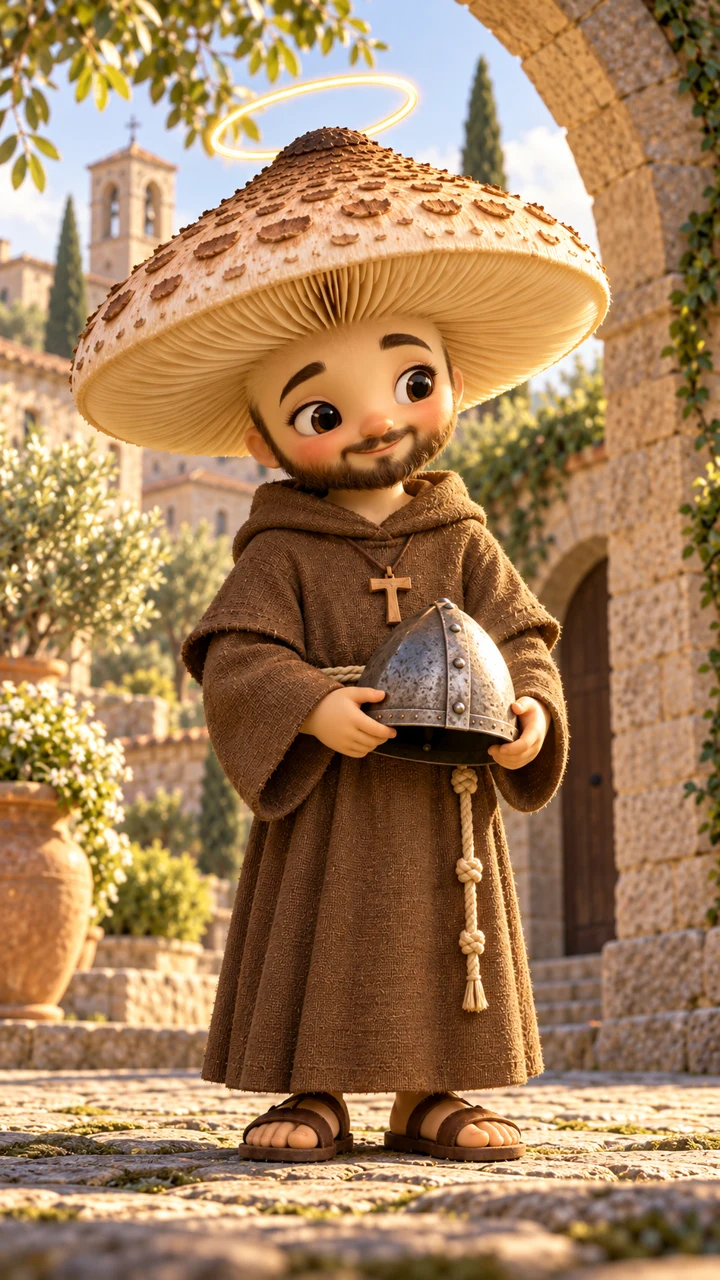
Based on The Holy See · Benedict XVI on St. Francis of Assisi ↗ and the Sacred Convent of Saint Francis · chronological biography ↗. SaintCaps images and film are AI-animated artistic retellings. The habit and halo identify the saint symbolically; Francis was not yet a friar during his captivity. Setting down the helmet is a visual metaphor, not a documented scene. The reflection is our own.